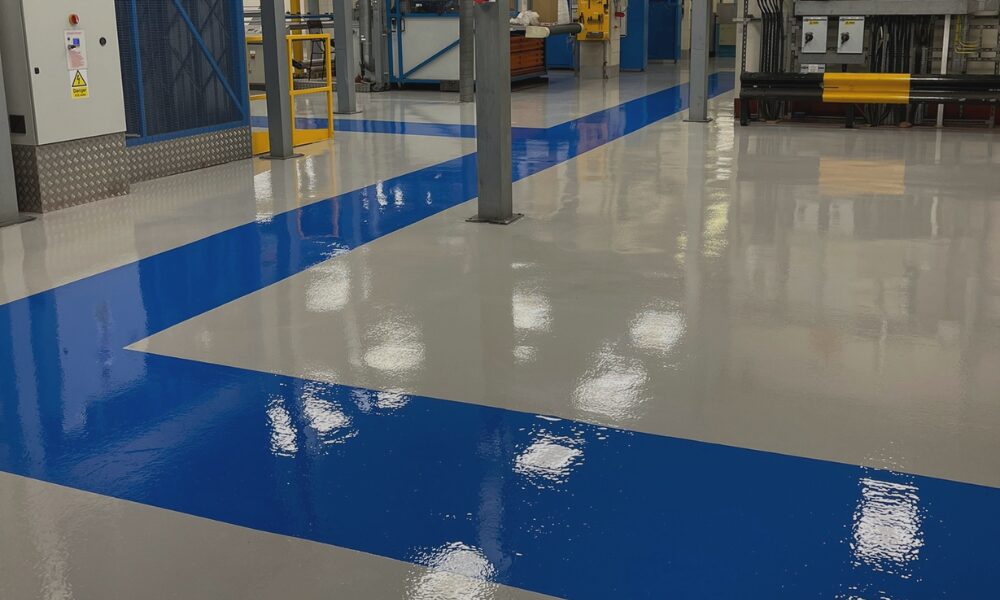
A resin floor should be a long-term investment, often delivering many years of service in demanding conditions. Yet plenty of businesses end up repairing or replacing their floors far sooner than expected, usually because of decisions made before installation even began. Whether you are refurbishing a warehouse, upgrading a workshop or fitting out a new commercial unit, talking to established resin flooring contractors covering England and Wales and avoiding the pitfalls below can save a great deal of money and disruption.
None of these mistakes are unusual. They tend to happen when a floor is treated as a straightforward purchase rather than a technical specification, or when a project is rushed to fit around a shutdown or a lease start date. The good news is that each one is easy to avoid with a little planning and the right questions asked early.
1. Choosing on price alone
It is tempting to accept the lowest quote, but resin floors vary enormously in thickness, system type and preparation method. Two quotes for the “same” floor can describe completely different specifications. A thin coating priced against a heavy-duty screed will always look cheaper, but if it wears through under forklift traffic within two years, it is the more expensive option by far. Compare like for like, and ask exactly what is included.
2. Picking the wrong system for the environment
Epoxy, polyurethane, MMA and cementitious urethane each have their own strengths and limitations. A standard epoxy coating that performs perfectly in a dry storage area may crack under regular steam cleaning, while a heavy-duty screed would be wasted in a low-traffic corridor. The specification should be driven by loads, chemicals, temperatures and cleaning regimes, not by whatever a supplier happens to have in stock. Where different parts of the same building have different demands, it is perfectly normal to specify more than one system, such as a heavy-duty screed in production and a lighter coating in stores and offices.
3. Skipping a proper site survey
A floor cannot be specified accurately from photographs or a quick phone call. A site survey allows a specialist to check the condition and strength of the concrete, test for moisture, identify contamination and assess cracks and joints. Contractors who quote without visiting are making assumptions, and those assumptions tend to surface later as extra costs or early failures. A thorough survey should always be followed by a written specification, so you know exactly what you are paying for.
4. Underestimating preparation
Preparation is the single biggest factor in how long a resin floor lasts. Shot blasting or diamond grinding removes weak surface layers and creates a profile the resin can properly bond to. Cutting this stage short to save time or money is one of the most common causes of peeling and delamination, and it is almost impossible to put right without starting again.
5. Ignoring downtime and access
Businesses sometimes agree a start date without fully considering how long areas will be out of use, or how curing times interact with deliveries, staff access and production. Different systems cure at different speeds: some can be walked on within hours, while others need several days before full loading. Planning phased work and agreeing access arrangements in advance avoids last-minute disruption.
6. Forgetting about maintenance
Even the toughest floor benefits from the right care. Using harsh or unsuitable cleaning chemicals, dragging heavy equipment with sharp edges or letting grit build up can all shorten its life. Ask your installer for written cleaning guidance and follow it, particularly in the first few weeks while the resin reaches full cure.
If you are still weighing up whether resin is the right choice at all, an article on a popular North Wales resource sets out the case for epoxy in industrial and commercial spaces and makes a useful starting point.
Getting it right first time
Most resin floor problems are avoidable. A clear brief, a thorough survey, a specification matched to the environment and an installer who takes preparation seriously will give you a floor that performs exactly as it should. Spending a little more time at the planning stage is almost always cheaper than dealing with the consequences later, both in repair bills and in the disruption a failed floor causes to the people who work on it every day.